
English| EUR
Suggested for you
More currencies
Choose a language
The Ypres Salient held more than half a million Commonwealth casualties between 1914 and 1918, and today it remains one of the most visited Great War landscapes accessible from Britain. This guide covers the practical decisions UK travellers face when arranging a battlefield tour: which operator to choose, how to reach Ypres independently, and what the memorial circuit actually involves on the ground.
Quick answer
Ypres battlefield tours from UK are offered by specialist operators as guided coach trips departing from London, Dover and regional cities, typically spanning two to four days with accommodation included. Independent travellers can reach Ypres via Eurotunnel or Dover-Calais ferry crossings in under four hours, with the battlefield memorials and In Flanders Fields Museum concentrated within a 15-kilometre radius of the town centre. Access to the Ypres Salient memorials is free, and most sites remain open daily from 09:00 to 18:00.
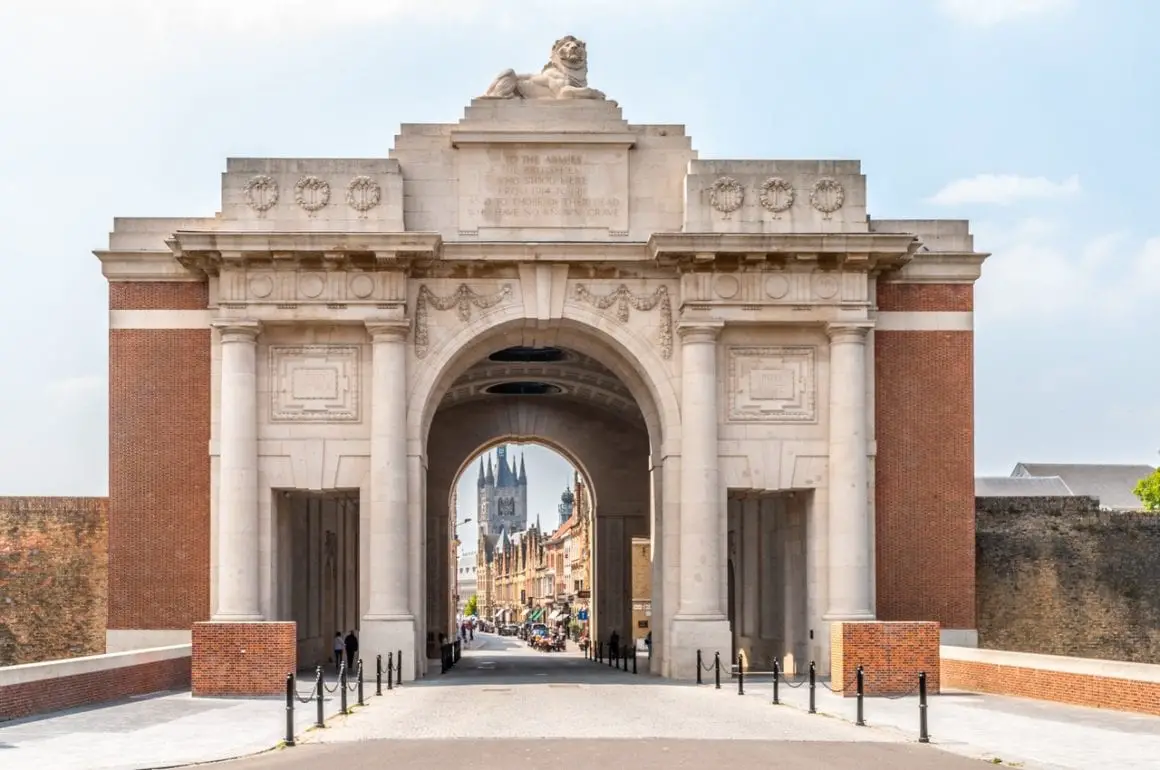
More British and Commonwealth soldiers are buried within twenty kilometres of Ypres than in any other zone of the Western Front. The Menin Gate alone bears 54,000 names of the missing, and Tyne Cot Cemetery holds nearly 12,000 graves. For UK visitors, the proximity of the battlefield to Channel ports has made the Ypres Salient the most accessible Great War pilgrimage since the Armistice, and that accessibility has shaped how tours are structured today. Most guided ypres battlefield tours from uk depart by coach from London, Dover or regional hubs, crossing either by ferry or Eurotunnel and continuing directly to Ypres. Two-day itineraries typically cover the Menin Gate, Tyne Cot, Passchendaele, and the preserved trench systems at Hill 62 and Sanctuary Wood, with attendance at the 20:00 Last Post ceremony built into the first evening. Three- and four-day tours extend the circuit to include the Somme, Vimy Ridge, or the Belgian coast memorials, depending on operator routing. Prices vary by season and group size, but the core Ypres itinerary remains consistent across operators: the Salient loop, museum entry, and ceremonial attendance. Independent travellers who prefer to move at their own pace will find Ypres straightforward to navigate. The town centre sits fifteen minutes on foot from the main railway station, and the battlefield circuit is well signposted in English. Driving from Calais takes under ninety minutes via the A16 and N8, and on-street parking near Grote Markt is free outside peak summer weekends. The In Flanders Fields Museum occupies the reconstructed Cloth Hall and provides the essential historical frame before visiting the cemeteries; allow two hours for the exhibition and another three for the Menin Gate, Tyne Cot, and one or two smaller sites. Guided battlefield tours from UK operators handle logistics and interpretation, but the Salient's compact geography and English-language signage make self-guided visits equally practical for those who have done the reading. The Menin Gate ceremony takes place every evening at 20:00 without exception, and attendance peaks in summer and on Armistice weekends. Arriving fifteen minutes early secures a position under the arch itself, where the buglers stand. The rest of the memorial circuit—Tyne Cot, Langemarck, the Brooding Soldier at Vancouver Corner—sees far lighter foot traffic, even in high season, and most visitors will have the cemeteries largely to themselves outside organized coach arrivals between 11:00 and 15:00.
“More British and Commonwealth soldiers are buried within twenty kilometres of Ypres than in any other zone of the Western Front.”
Ypres is located in the West Flanders region of Belgium and is accessible from the United Kingdom via high-speed rail or cross-channel ferry services. The most efficient approach involves combining international rail or road transport with regional Belgian rail connections to Ieper station.
Eurostar from London St Pancras to Lille Europe, then local train to Ieper
M20 to Dover, ferry or Eurotunnel to Calais, then A16/E40 to Ypres
Coach services from London Victoria to Lille, followed by local regional bus or rail transfer
The best arrival window is 09:00–11:00, which avoids mid-day peak tour crowds and provides more time for site exploration. Visitors arriving by car should utilize public parking facilities on the outskirts of the town center to access Grote Markt 34.
This itinerary suits visitors travelling from the UK who want to cover the essential Ypres Salient sites in one full day or a relaxed two-day visit. Allow 6-8 hours for the core circuit, with flexibility to add smaller cemeteries or museums.
Begin at the Menin Gate Memorial to the Missing, where 54,000 names are inscribed. The Last Post ceremony takes place here every evening at 20:00, so consider returning if time allows.
Located on the Grote Markt, this museum provides essential context on the Ypres Salient through personal stories and interactive exhibits. Budget 90 minutes to two hours.
Break for lunch near the Cloth Hall; several cafés and restaurants line the square. Use this time to rest before heading to outlying sites.
Drive 15km northeast to Tyne Cot, the largest Commonwealth war cemetery in the world with nearly 12,000 burials. The visitor centre and memorial wall require at least an hour.
Visit the nearby Passchendaele Memorial and Hill 62 (Sanctuary Wood) Museum, where preserved trenches and craters remain. Allow 60-90 minutes combined.
Head back to Ypres for an evening meal. If staying overnight, attend the Last Post at the Menin Gate before dinner.
To maximize your experience, the best arrival window is 09:00–11:00. This period avoids mid-day peak tour crowds and provides more time for site exploration.
Mild temperatures of 10°C to 17°C
Spring offers comfortable walking conditions for touring outdoor sites and cemeteries.
Cooler, stable weather of 11°C to 18°C
Autumn months provide pleasant conditions with fewer visitors than the peak summer season.
—
Arriving between 09:00–11:00 allows for quieter reflection at major memorials before the arrival of afternoon tour groups.
Verdict: The best time to visit is during weekday mornings in April or October, arriving between 09:00–11:00 to avoid peak crowds.
Access to the Ypres battlefield region and all public memorials is provided free of charge to all visitors. Fees are only applicable when choosing to book private guided tours or transport services from the UK.
Verdict: Individual visitors pay 0 EUR for site access, though costs vary based on your selected third-party travel and tour arrangements.
Visitor resources for Ypres battlefield tours from the UK operate daily to assist with trip planning and regional inquiries.
Prepare for a full day exploring memorials and trenches across the Ypres Salient with the right documentation and weather-appropriate gear.
Everything you need to know about ypres battlefield tours from uk
Travelers typically organize their journey via cross-channel transport before joining local guided excursions. You can arrange logistics through our booking funnel, which connects you with professional operators specialized in the Salient. Visiting the region requires careful coordination between your arrival in Belgium and the start of local memorial tours.
Most visitors traveling for ypres battlefield tours from uk choose to reach the region by train or private vehicle. Once in Ypres, many historical sites are accessible from the Grote Markt, which serves as a central hub for logistics. Detailed transit information is available in our dedicated transport section.
Access to the Ypres battlefield region and memorials is free. Please note that while site entry is free, professional guide services or coach transport may carry their own operational costs.
The best arrival window is 09:00–11:00, as this avoids mid-day peak tour crowds and provides more time for site exploration. This schedule allows for a more reflective experience at landmarks like Menin Gate and Tyne Cot. Planning your visit for the early morning ensures you can see key trenches and cemeteries before the afternoon rush.
Yes, families are welcome to participate in historical educational visits across the region. We recommend confirming the duration and activity level with your chosen guide to ensure the itinerary suits younger visitors. Engaging with the history of the Western Front can be a meaningful experience for all ages.
Guided walking tours of Ypres focus on the city's reconstruction and its role during the Great War. These tours often start near Grote Markt 34 and cover essential landmarks like the Cloth Hall and In Flanders Fields Museum. You can review available local itineraries via our booking integration.